
The Ministry of Health has defended Uganda’s response to the current Ebola outbreak, saying the country’s long experience in managing communicable diseases demonstrates strong preparedness and transparency, even as it criticised travel restrictions imposed by some foreign governments.
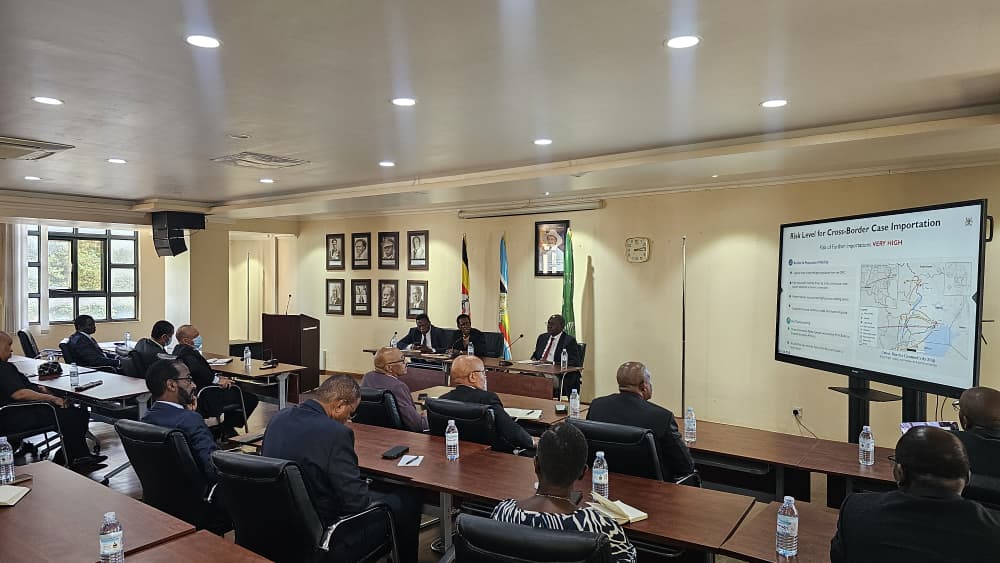
The remarks were made during a briefing for members of the African Diplomatic Corps held in Kampala.
Speaking at the briefing, Permanent Secretary at the Ministry of Health Diana Atwine said Uganda’s surveillance and response systems remain robust, noting that most confirmed cases have been effectively contained.
“Uganda’s history in communicable disease management is well-known and we shall not shy away from our capabilities,” Atwine said.
“Uganda will not apologize for being transparent.”
She said all confirmed Ebola cases identified so far were imported, adding that more than 90 percent of patients were already in institutional quarantine at the time of diagnosis, a measure she described as key to preventing wider transmission.
Atwine said Uganda’s existing surveillance and rapid response structures have helped keep the outbreak under control, despite its regional nature.
“Uganda has demonstrable structures, measures and countermeasures,” she said.
However, she criticised what she termed “extreme measures” by some countries, including travel bans and negative advisories, arguing that such actions could discourage timely outbreak reporting in future public health emergencies.
“Uganda should be applauded and not ostracised for its transparency,” she said, warning that blanket travel restrictions risk undermining global health cooperation.
She also called for strengthened regional coordination, particularly along the Uganda–Democratic Republic of Congo border, where the outbreak has been linked.
“It is paramount that resources be channeled to the epicentre of the problem in Ituri,” she said, urging closer Uganda–DRC collaboration and enhanced cross-border surveillance.
The briefing brought together diplomats resident in Uganda and was aimed at updating the international community on the country’s preparedness and containment efforts.
Meanwhile, WHO Director-General Tedros Adhanom Ghebreyesus has repeatedly urged countries to adopt balanced, science-based approaches to outbreak management, warning that unnecessary travel restrictions can hinder response efforts and strain international cooperation during public health emergencies.
The Ministry of Health emphasised that continued collaboration between regional governments and international partners remains essential to preventing further spread of the virus, particularly in high-risk border areas.
